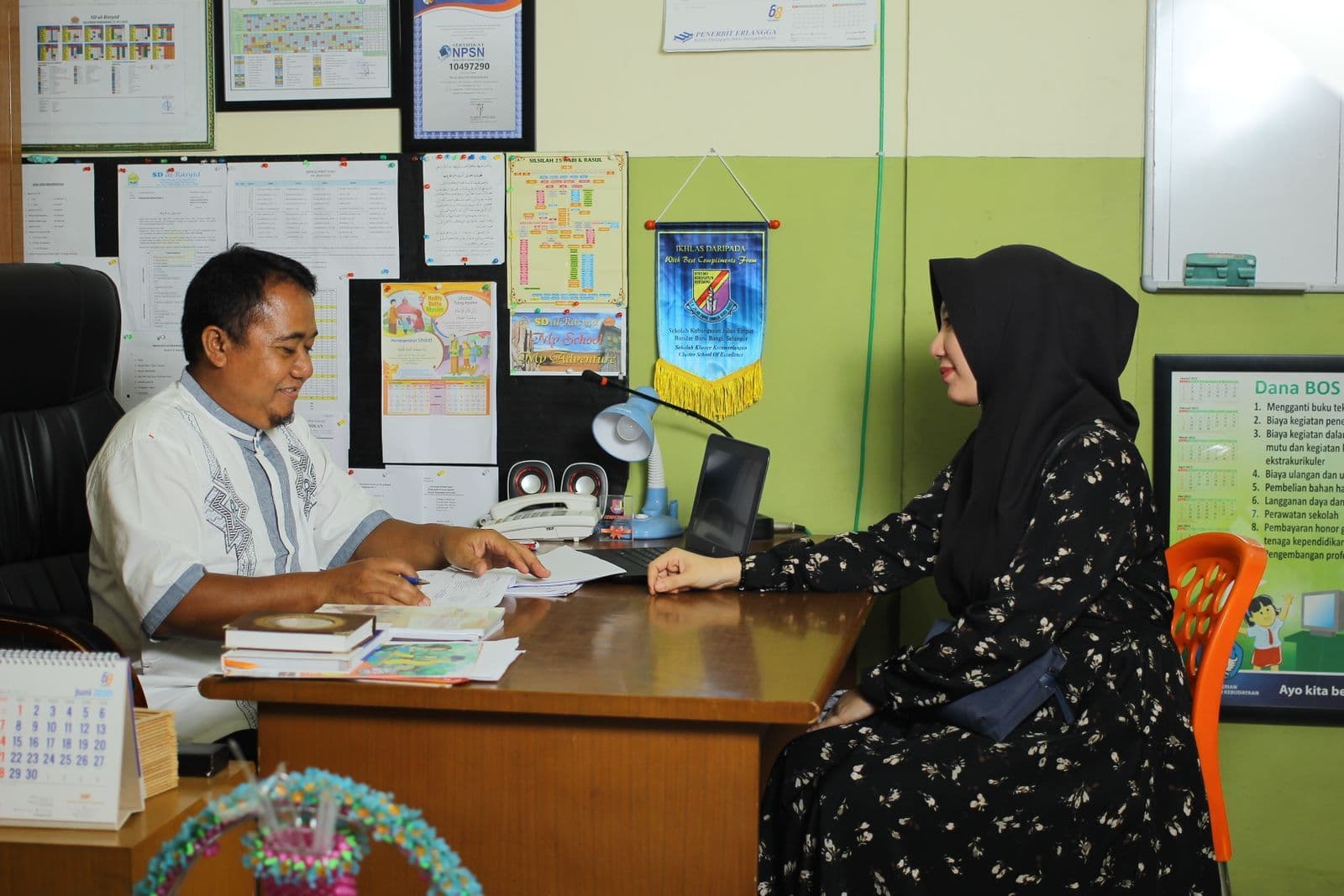
A Structure for Talking to Parents About a Student's Progress
A four step structure for talking to parents about student progress, what belongs in a progress report, and the measured effect of one sentence messages home.
FH
Faria Haque
·5 min read
Most parent meetings end the same way. The teacher says the boy is doing well and would do better with a little more attention. The parent nods, says thank you, and goes home without knowing what to actually do. Both sides leave satisfied and nothing about the student changes.
The problem is not sincerity. It is structure. A defined structure for talking to parents about a student's progress turns the same ten minutes into something that produces a result, and the size of that result has been measured.
How much teacher to parent communication actually does
Two experimental studies answer this directly.
In the first, parents of 435 students received one short message a week for four weeks. The messages averaged 8.7 words. That alone cut the rate of failing to complete the course by 41 percent.
The type of message mattered more than the fact of it. Messages telling parents what the student needed to improve were roughly twice as effective as messages offering praise. The reason is visible in the data: 84 percent of the improvement messages were things a parent could act on, against 8.5 percent of the praise messages.
In the second study, parents of 140 students received a phone call or a written message every day for a week. The odds of submitting completed homework on time rose by 40 percent, class participation rose 15 percent, and the number of times teachers had to redirect a student in class fell by 25 percent.
One sentence works this well probably because most parents do not know where their child actually stands in class. Close that information gap and behaviour changes.
This fits a wider review of parental involvement at secondary level, which found the relationship between parental involvement and student achievement consistently positive across many studies. Keeping parents informed is not a courtesy. It is an input.
The four steps of a ten minute conversation
The structure is short and stays the same for every parent.
Step one, give a fact, not an adjective. "Doing well" and "not concentrating" carry no information. "He scored 62, 58 and 71 in the last three maths tests, and the marks are dropping specifically in geometry" is information. A parent can act on the second one.
Step two, pick one thing, not three. List several problems at once and the parent addresses none of them. Name the single issue with the largest effect.
Step three, give one specific task for home. "Keep an eye on him" is not a task. "Have him do two geometry problems every night, it takes 15 minutes" is a task. The more specific it is, the more likely it happens.
Step four, set the date of the next contact. "I will tell you in three weeks whether the geometry marks have moved." That one line converts a conversation into a commitment, and the parent knows somebody will follow up.
What belongs in a progress report
Keep the report short: where the student stands in each subject, and what comes next.
Most progress reports are lists of marks. A mark on its own says nothing. A trend says something.
Include the attendance rate as a number. Irregular attendance is the first symptom of almost every other problem, and it is the one thing fully within a parent's control.
Show three test scores side by side rather than one. Whether 70 is good or bad only becomes clear next to the two before it.
Compare the student against their own earlier results, not against the class. Ranking a weak student against classmates produces shame in the parent, and shame produces no action.
Write subject comments, but make them specific. Not "weak in English" but "can write a paragraph, but makes frequent errors in tense."
End with one task. A report that asks the parent to do exactly one thing stops being paper and becomes work.
Habits that undo the effort
Calling only when there is a problem. If your number on the screen means bad news, parents start not answering. Send good news sometimes too, and keep the good news specific.
Delivering too much at once. Seven problems across three subjects in ten minutes and the parent remembers none of them.
Assuming things about the home. Whether there is a place to study, who has the time, whether there is internet, there is only one way to know any of this, which is to ask.
Leaving everything spoken. Send a one line message after the meeting recording what was agreed. Spoken words are gone in a week. Written ones are not.
A communication routine that is actually sustainable
No institution can call every parent every day. But what the research points to is regularity and specificity, not volume. A small institution can run this.
Once a week, a one line message, only to parents of students whose attendance or submitted work has slipped. One line is enough. The average in the study was under nine words.
Once a month, a progress report for everyone, with attendance and three test scores.
Once a quarter, a ten minute conversation in person or by phone, following the four steps above.
And any time something goes well, a message in that moment. Those messages are what make the difficult conversations possible later.
How to deliver bad news
Some conversations are hard, and avoiding them lets the problem grow.
Three things help. State what happened, without explanation or judgement. Then say what the institution is doing about it. Then say what you need from the parent. In that order the parent does not become defensive, because they can see the responsibility is being shared.
The thing not to do is bring up another student as an example. Comparison never helps.
The summary
A short specific message outperforms a long vague meeting, and there is evidence for that. Give a fact, pick one issue, assign one task at home, and name the date of the next contact. Praise is pleasant, but a parent cannot act on praise.
References
Kraft, M. A., and Rogers, T. (2015). The underutilized potential of teacher-to-parent communication: Evidence from a field experiment. Economics of Education Review, 47, 49-63. https://doi.org/10.1016/j.econedurev.2015.04.001
Kraft, M. A., and Dougherty, S. M. (2013). The Effect of Teacher-Family Communication on Student Engagement: Evidence From a Randomized Field Experiment. Journal of Research on Educational Effectiveness, 6(3), 199-222. https://eric.ed.gov/?id=EJ1164707
Jeynes, W. H. (2007). The Relationship Between Parental Involvement and Urban Secondary School Student Academic Achievement: A Meta-Analysis. Urban Education, 42(1), 82-110. https://doi.org/10.1177/0042085906293818
Google Meet or Zoom for online classes in Bangladesh, compared on free tier time limits, recording, breakout rooms, data cost and joining friction, with official sources.
Seven practical ways to hold students' attention in an online class, from optional cameras to polls, warm calling and retrieval practice, with the research behind each.
FH
Faria Haque
·5 min read
What would this look like at your institution?
Take a 15-minute demo with your own batches, attendance, and fee figures.