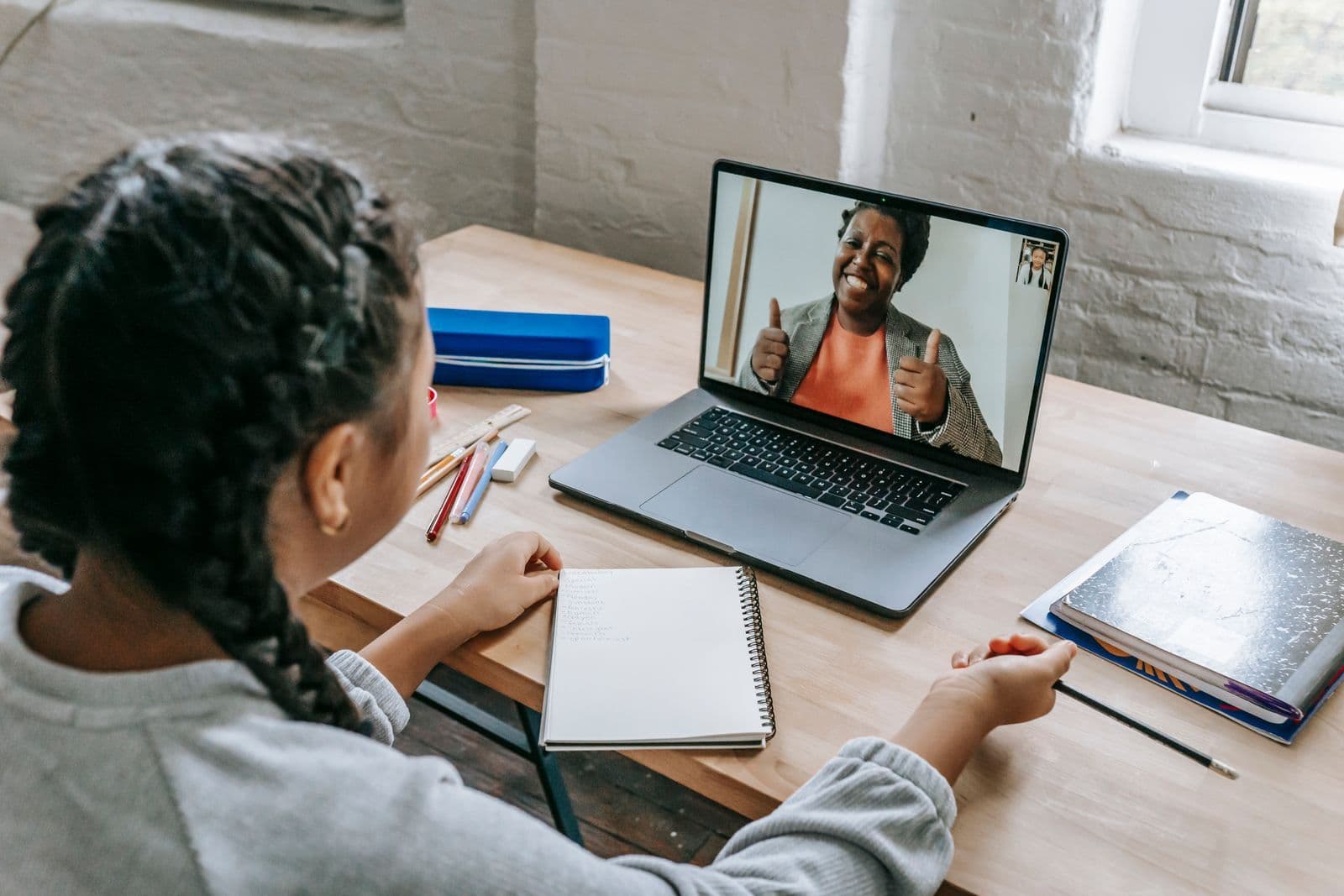
Seven Practical Ways to Hold Students' Attention in an Online Class
Seven practical ways to hold students' attention in an online class, from optional cameras to polls, warm calling and retrieval practice, with the research behind each.
FH
Faria Haque
·5 min read
The most uncomfortable part of teaching online is the silence. Cameras off, microphones off, a question asked and nothing coming back. You cannot tell whether anyone is listening. Many teachers conclude this is a generational attention problem, but the research points somewhere else. How to keep students engaged in online classes depends mostly on how the class is structured, not on how motivated the students are.
The seven approaches below can be applied to your next class. Each one rests either on assessment research or on data about what actually happens in online classes.
1. Talk less, make them do more
The biggest change is also the most ordinary. When a student only listens, holding attention becomes their private responsibility. When they have to do something, the responsibility shifts to the structure of the class.
A review of 225 studies in science and mathematics teaching found that exam performance improved substantially under active learning compared with traditional lecturing, and failure rates fell from 33.8 percent to 21.8 percent. That research was not about online classes, but the principle transfers, and online it matters more, because every distraction a student could want is already in their hand.
In practice this is simple. Give students something to do at least three times per class. A problem, a short question, an answer in the chat, anything.
2. Do not make cameras compulsory
Most teachers read a dark screen as a disengaged student. A Cornell study asked 276 students why they kept their cameras off. The answers had very little to do with attention. Forty one percent cited discomfort about their appearance, 26 percent said other people were visible behind them, and 22 percent cited a weak internet connection.
In Bangladesh these reasons are sharper still. Many students attend on mobile data, where keeping video on multiplies the cost. Many sit in one room shared with the whole family.
Making cameras compulsory puts the heaviest pressure on the students in the weakest position. The study's recommendation was to leave cameras optional, provide other routes to participate such as chat and polls, and explain the benefits of turning a camera on rather than issuing an instruction.
3. Build in a participation point every eight to ten minutes
A familiar claim says human attention runs out after ten or fifteen minutes. The evidence behind that number is weak, and education researchers treat it as an oversimplification. So do not use it as a biological law. Use it as a way to structure a class.
The structure works for a different reason. When participation comes at regular intervals, students know they may be asked to do something at any moment. That expectation is what holds attention, not the clock.
A question, a poll, or a one line answer in the chat every eight to ten minutes is enough. Nothing elaborate is required.
4. Call on students by name, but warn them first
Calling on someone without warning frightens most students, and fear does not produce attention, it produces silence. Never calling on anyone leaves the class in the hands of the same three confident students.
The middle path works. Ask the question, give 30 seconds of thinking time, then call a name. Everyone is prepared, because nobody knows whose name is coming but everyone has thought about the question.
Say at the start of the course that you will call on people and that wrong answers are not a problem. A student who knows a wrong answer carries no humiliation will take the risk of answering.
5. Make chat and polls the main channel for participation
Small moments of participation, a reply in chat or a vote in a poll, bring a student back into the class.
Speaking up online is hard for many students. There is noise at home, the microphone is poor, or they are simply shy. Typing in the chat removes all of those barriers and costs almost no data.
The most effective rule for chat is the simultaneous answer. Ask the question, tell everyone to type but not press enter, then have them all send at once. Nobody copies the answer above them, and you can see at a glance how many understood.
Polls are even faster. A single poll question tells you in 30 seconds whether moving to the next section is a good idea.
6. Open the class with three questions from last time
Many teachers open by summarising the previous class. It is comfortable, but the student only listens. Spend the same minutes asking three questions about the previous class instead and the task becomes something else entirely.
Pulling information back out of memory is called retrieval practice in the learning literature, and a large body of research finds it more effective for retention than rereading the same material.
There is a second benefit. It activates the whole class in the first three minutes. A student who participated in minute one is far more likely to come back in minute forty.
7. Do not read silence as disengagement
A Stanford paper explains video call fatigue through four causes: prolonged close up eye contact with faces on a screen, seeing yourself constantly, reduced mobility, and the extra cognitive effort of reading body language through a camera. Together they make a video class more tiring than a room.
That has a practical consequence for teachers. The feedback you normally get in a classroom through eye contact and nodding does not arrive online. Teachers fill the gap by assuming nobody is listening, and lose heart.
The fix is to build the feedback channel rather than guess. A poll or a one line chat answer every ten minutes tells you what silence never will.
One suggestion for yourself as well: hide your own video preview. Watching your own face for an hour adds to the fatigue, and switching it off takes one click.
The summary in one line
Attention online is held by structure, not by personality. Leave cameras optional and give students other ways in, ask them to do something every ten minutes, and treat silence as an absence of information rather than as information.
Castelli, F. R., and Sarvary, M. A. (2021). Why students do not turn on their video cameras during online classes and an equitable and inclusive plan to encourage them to do so. Ecology and Evolution, 11(8), 3565-3576. https://doi.org/10.1002/ece3.7123
Bailenson, J. N. (2021). Nonverbal Overload: A Theoretical Argument for the Causes of Zoom Fatigue. Technology, Mind, and Behavior, 2(1). https://doi.org/10.1037/tmb0000030
Google Meet or Zoom for online classes in Bangladesh, compared on free tier time limits, recording, breakout rooms, data cost and joining friction, with official sources.
A four step structure for talking to parents about student progress, what belongs in a progress report, and the measured effect of one sentence messages home.
FH
Faria Haque
·5 min read
What would this look like at your institution?
Take a 15-minute demo with your own batches, attendance, and fee figures.